
What Is Digital Marketing? A Beginner's Guide to Getting Started
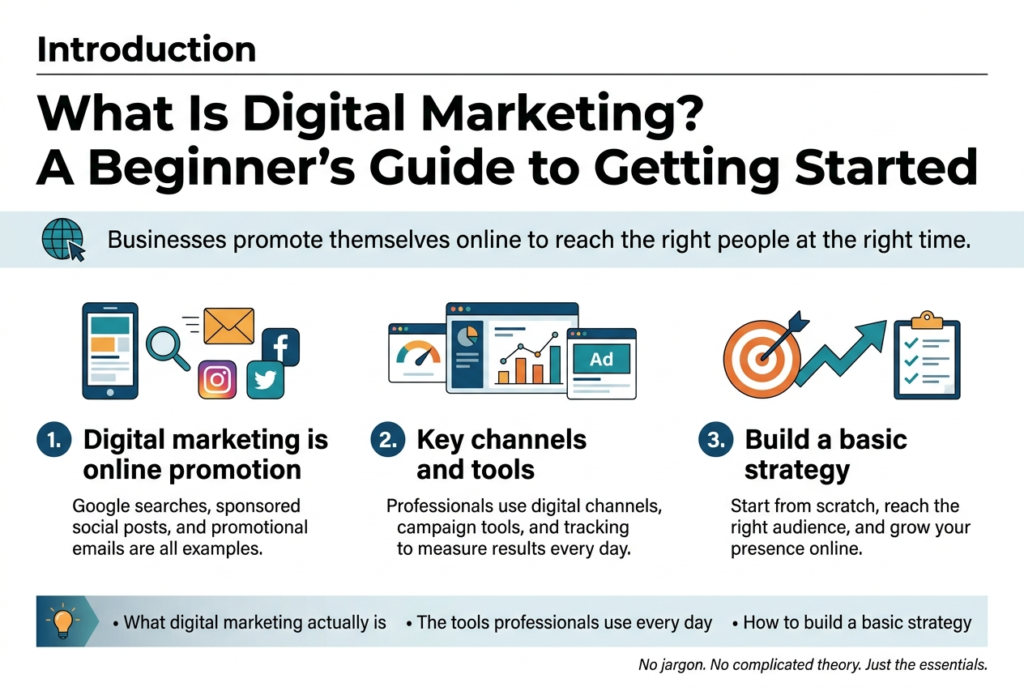
If you've ever Googled a product, clicked a sponsored Instagram post, or opened a promotional email — you've already experienced digital marketing in action.Digital marketing is how businesses promote themselves online to reach the right people at the right time. And right now, it's one of the most in-demand skills across every industry.This guide is for small business owners, aspiring marketers, and anyone who's curious about how brands grow their presence online without always relying on traditional ads
.Here's what you'll walk away knowing
:What digital marketing actually is and the key channels that make it work
The tools professionals use every day to run campaigns and track results
How to build a basic strategy — even if you're starting from scratch
No jargon, no complicated theory. Just a straight-up breakdown of how digital marketing works and why it matters for businesses of every size
.Let's get into it.
Understanding the Core of Digital Marketing
Definition and Key Concepts Explained Simply
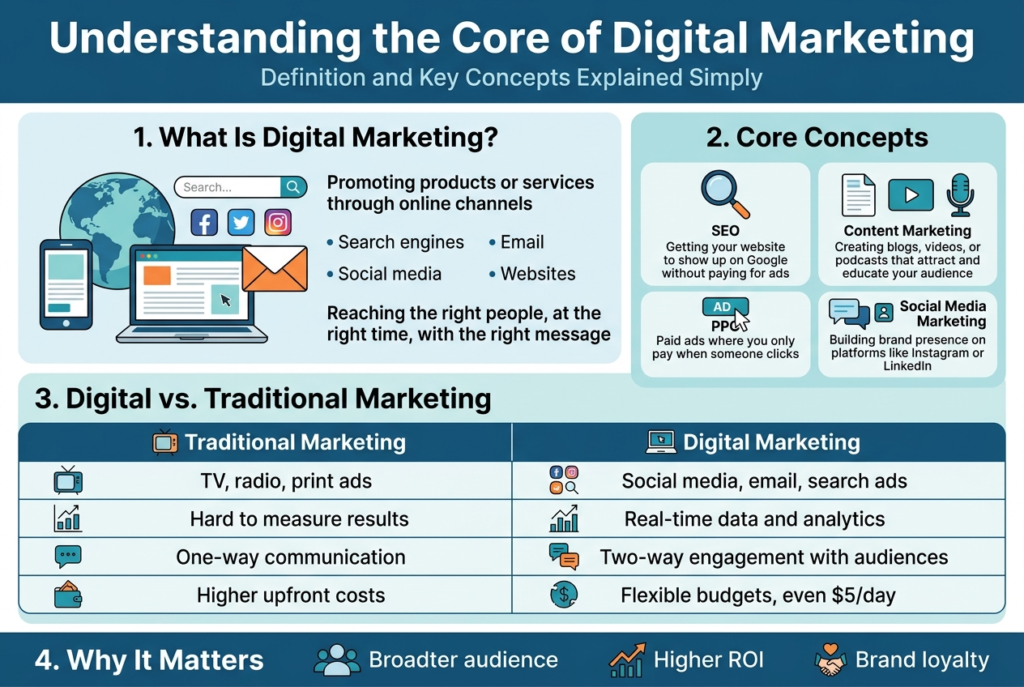
Digital marketing is promoting products or services through online channels — think search engines, social media, email, and websites. At its core, it's about reaching the right people, at the right time, with the right message — all happening online.
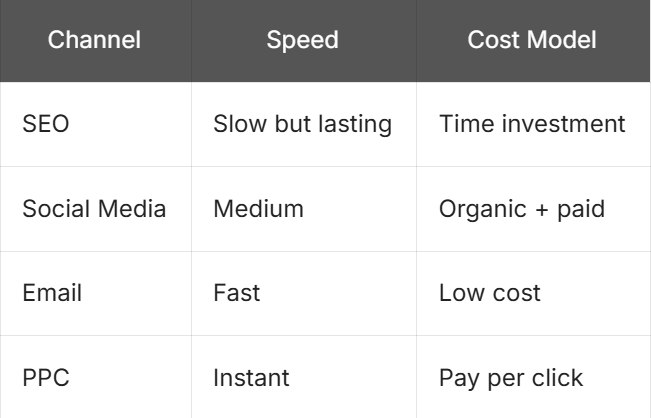
SEO – Getting your website to show up on Google without paying for ads
Content Marketing – Creating blogs, videos, or podcasts that attract and educate your audience
PPC – Paid ads where you only pay when someone clicks
Social Media Marketing – Building brand presence on platforms like Instagram or LinkedIn
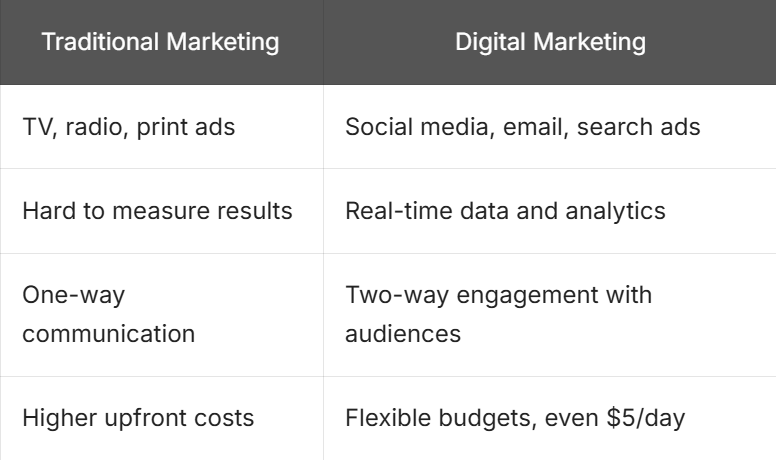
How Digital Marketing Differs From Traditional Marketing
Why Digital Marketing Matters in Today's Business World
People spend an average of 6+ hours online daily. If your business isn't showing up where your customers already are, you're leaving money on the table. Digital marketing levels the playing field — a small bakery can compete with big brands using the right strategy.
Key Channels That Drive Digital Marketing Success
Search Engine Optimization and Organic Reach
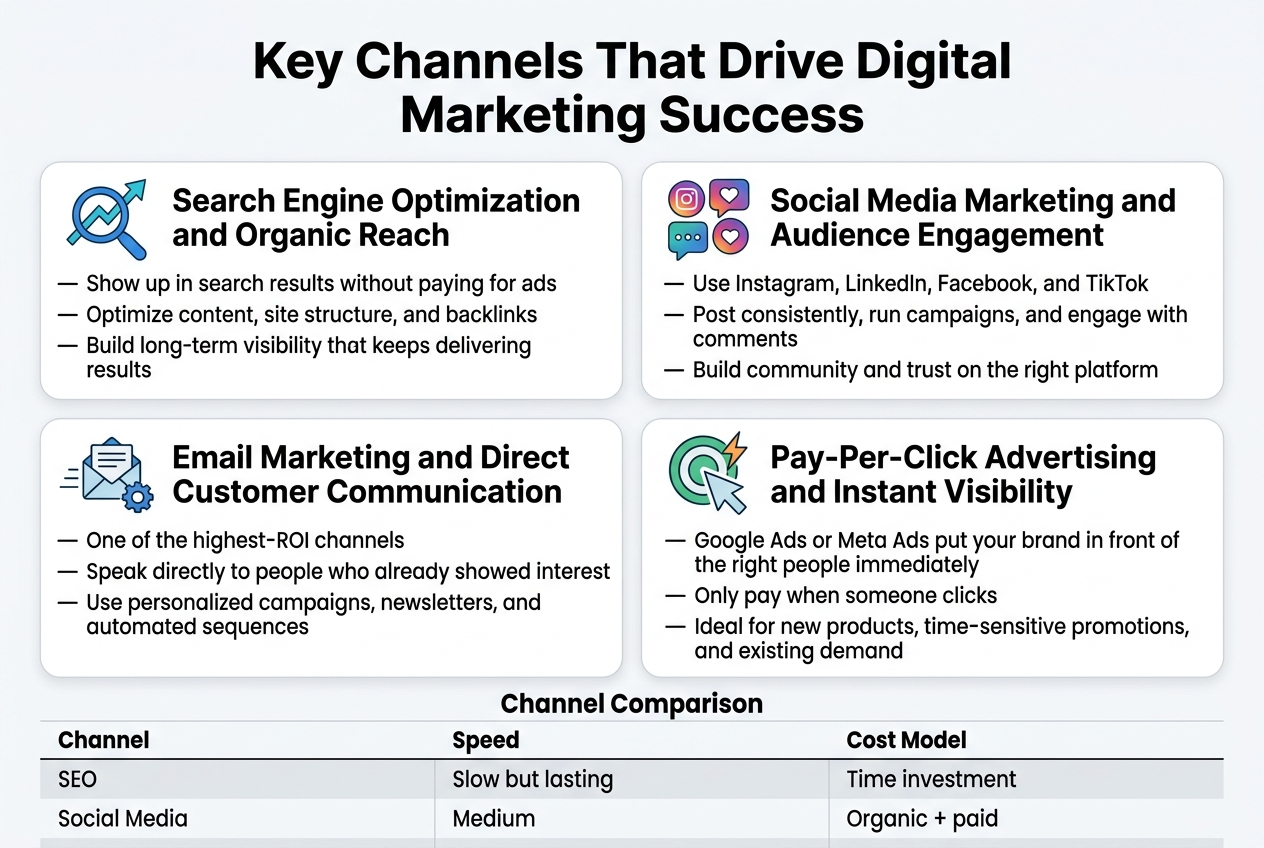
SEO is about getting your website to show up when people search for topics related to your business — without paying for ads. It involves optimizing your content, site structure, and backlinks so search engines like Google rank you higher naturally. Strong SEO builds long-term visibility that keeps delivering results.
Social Media Marketing and Audience Engagement
Platforms like Instagram, LinkedIn, Facebook, and TikTok give brands a direct line to their audience. Posting consistently, running campaigns, and engaging with comments builds community and trust. Each platform attracts a different crowd, so choosing the right one depends on where your customers actually spend their time.
Email Marketing and Direct Customer Communication
Email remains one of the highest-ROI channels available. It lets you speak directly to people who already showed interest in your brand. Personalized campaigns, newsletters, and automated sequences keep your audience engaged and move them closer to a purchase.
Pay-Per-Click Advertising and Instant Visibility
PPC ads — like Google Ads or Meta Ads — put your brand in front of the right people immediately. You only pay when someone clicks. It's ideal for launching new products, running time-sensitive promotions, or capturing demand that already exists.
Essential Tools Every Digital Marketer Should Know
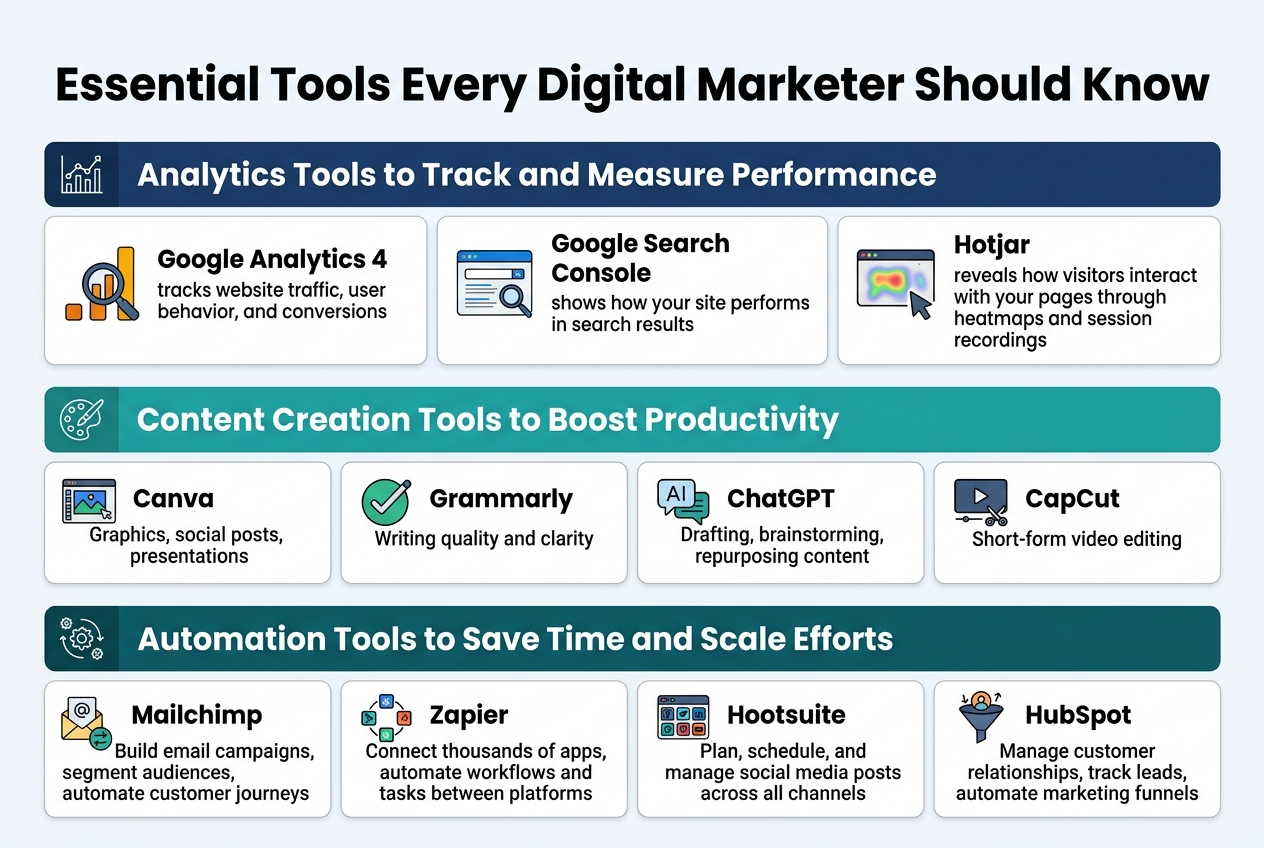
Analytics Tools to Track and Measure Performance
Knowing what's working (and what's not) is everything in digital marketing. These tools give you real answers
:Google Analytics 4 – tracks website traffic, user behavior, and conversions
Google Search Console – shows how your site performs in search results
Hotjar – reveals how visitors interact with your pages through heatmaps and session recordings
Content Creation Tools to Boost Productivity
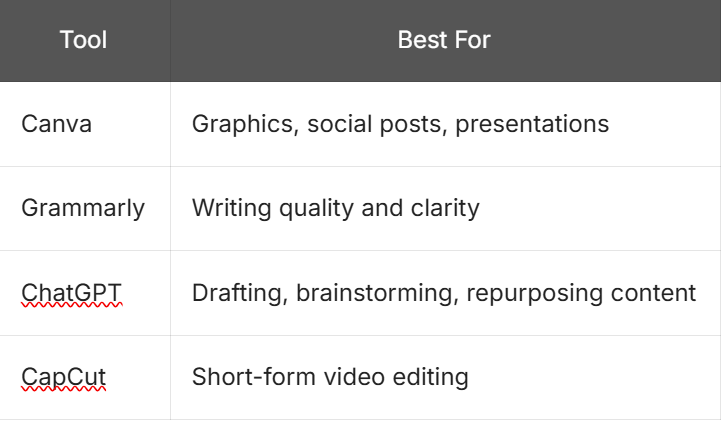
Great content doesn't require a design degree or a massive budget. These tools make the process faster and cleaner:
Automation Tools to Save Time and Scale Efforts
Doing everything manually burns you out fast. Automation handles the repetitive stuff so you can focus on strategy
:Mailchimp – automates email sequences and audience segmentation
Buffer / Hootsuite – schedules social media posts across platforms
HubSpot – manages your CRM, email, and campaigns in one place
Zapier – connects different apps to automate workflows without coding