
What Is SEO? A Plain-English Guide for Beginners
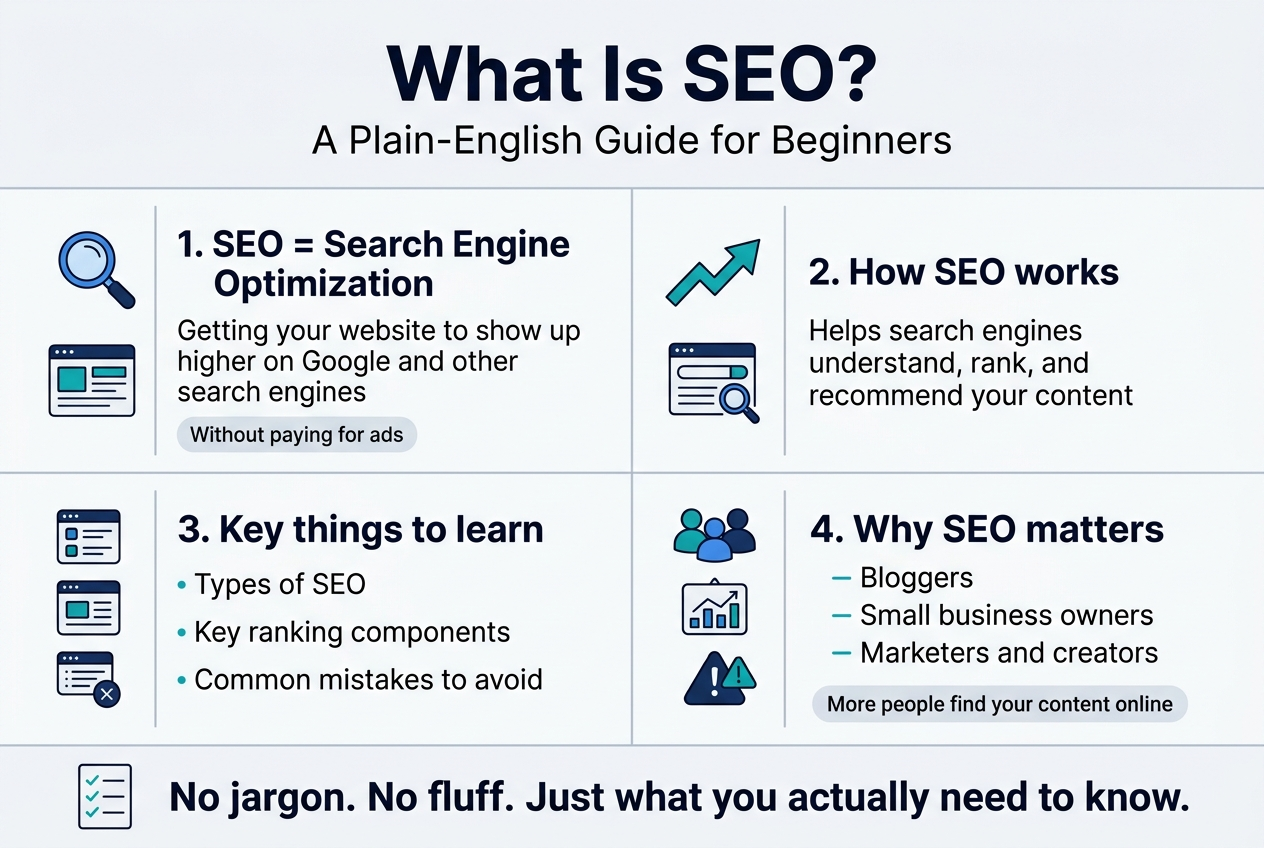
If you’ve heard the term SEO thrown around but still aren’t sure what it actually means, you’re in the right place.
SEO, or search engine optimization, is the process of getting your website to show up higher on Google and other search engines — without paying for ads. It’s a skill that matters for bloggers, small business owners, marketers, and anyone who wants more people to find their content online.
In this guide, you’ll learn exactly how SEO works, the different types you should know about, and the key components that make a website rank. You’ll also walk away knowing the real benefits SEO delivers and the common mistakes that quietly kill a site’s chances of ranking.
No jargon. No fluff. Just what you actually need to know.
Understanding the Core Concept of SEO
The Simple Definition of SEO and Why It Matters
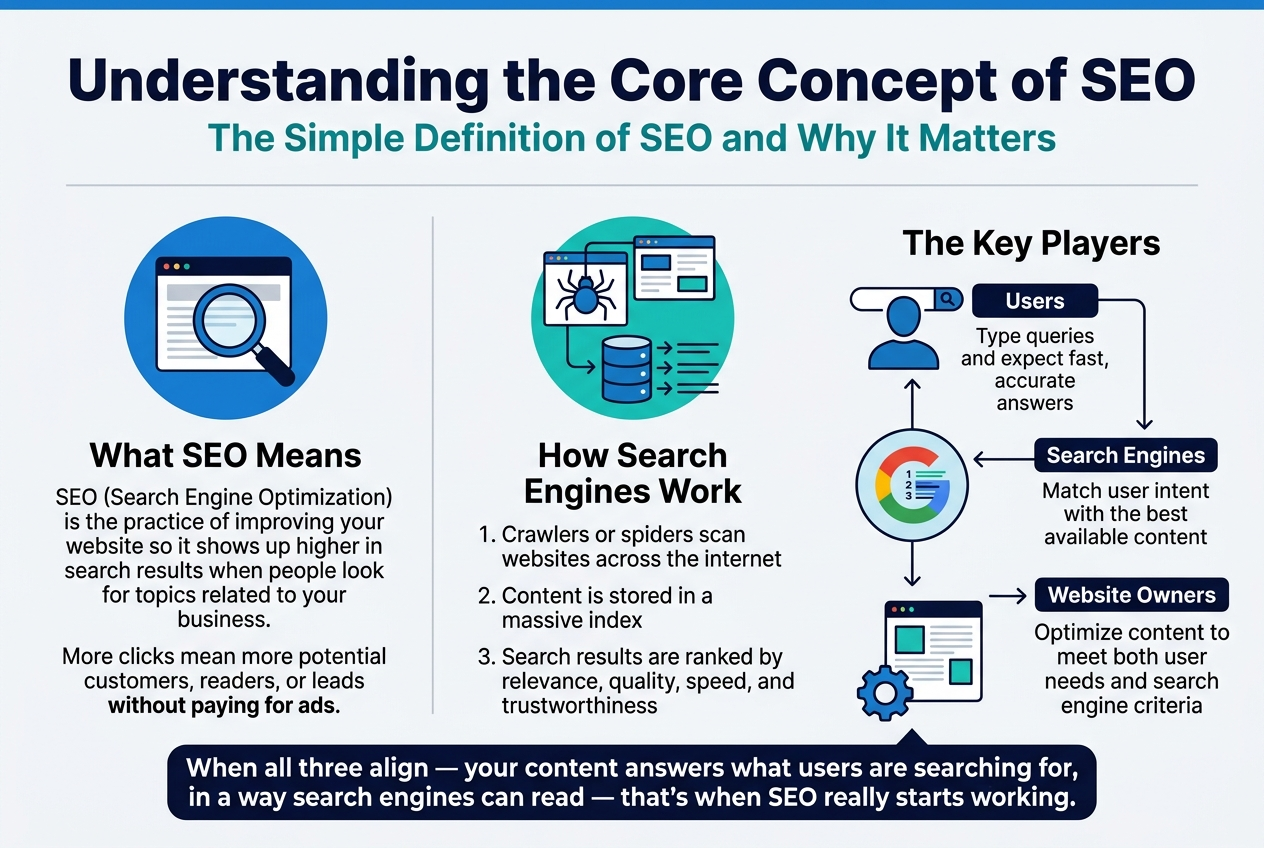
SEO (Search Engine Optimization) is the practice of improving your website so it shows up higher in search results when people look for topics related to your business. The higher you rank, the more people click through — and more clicks mean more potential customers, readers, or leads, without paying for ads.
How Search Engines Work to Find and Rank Content
Search engines like Google use automated programs called crawlers or spiders to scan websites across the internet. Once they find your content, they store it in a massive index. When someone searches, Google pulls from that index and ranks results based on hundreds of factors — relevance, quality, speed, and trustworthiness among them.
The Key Players: Users, Search Engines, and Website Owners
SEO works because of three interconnected parties:
| Player | Role |
|---|---|
| Users | Type queries and expect fast, accurate answers |
| Search Engines | Match user intent with the best available content |
| Website Owners | Optimize content to meet both user needs and search engine criteria |
When all three align — your content answers what users are searching for, in a way search engines can read — that’s when SEO really starts working.
The Main Types of SEO You Need to Know
On-Page SEO: Optimizing What Is on Your Website
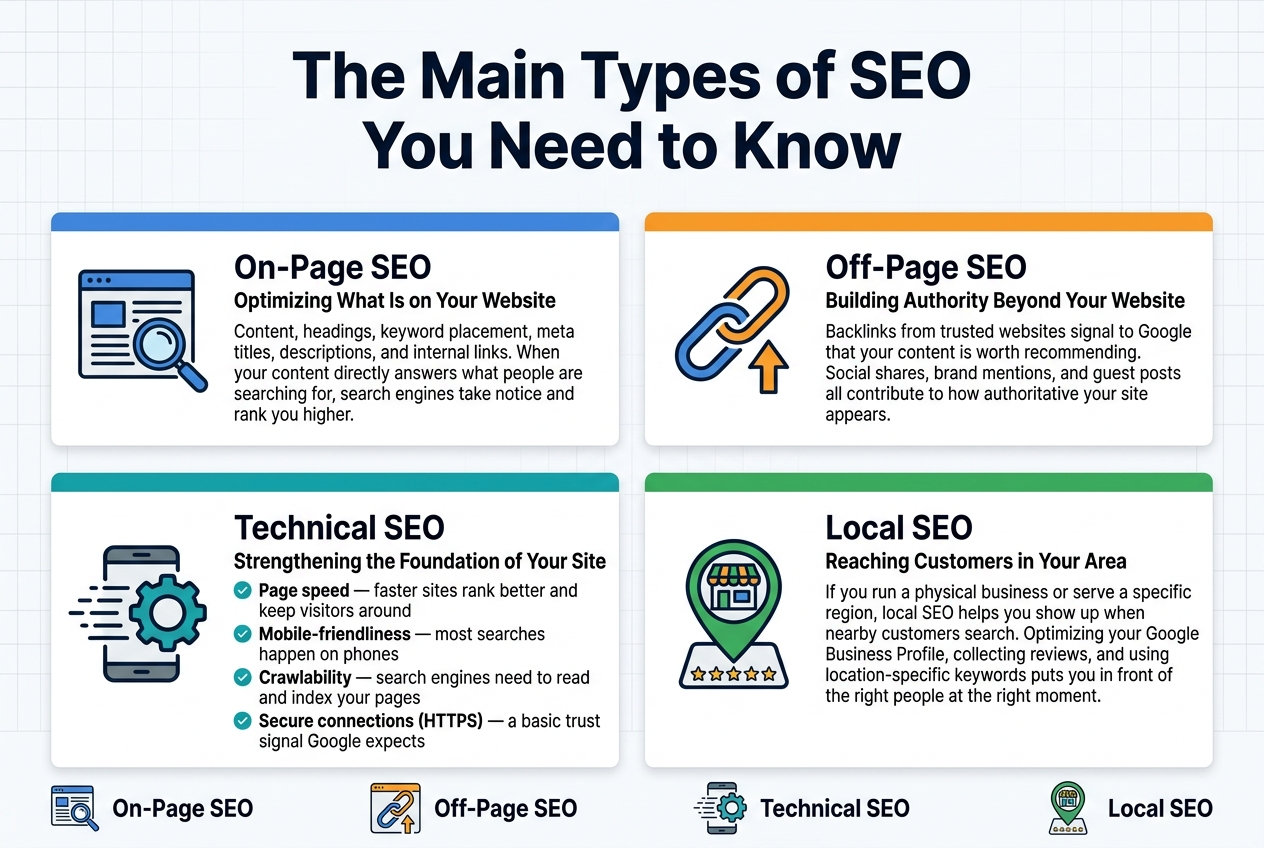
This covers everything visible on your pages — content, headings, keyword placement, meta titles, descriptions, and internal links. When your content directly answers what people are searching for, search engines take notice and rank you higher.
Off-Page SEO: Building Authority Beyond Your Website
Think of this as your site’s reputation on the internet. Backlinks from trusted websites signal to Google that your content is worth recommending. Social shares, brand mentions, and guest posts all contribute to how authoritative your site appears.
Technical SEO: Strengthening the Foundation of Your Site
Even great content fails if your site is slow or broken. Technical SEO addresses:
- Page speed — faster sites rank better and keep visitors around
- Mobile-friendliness — most searches happen on phones
- Crawlability — search engines need to read and index your pages
- Secure connections (HTTPS) — a basic trust signal Google expects
Local SEO: Reaching Customers in Your Area
If you run a physical business or serve a specific region, local SEO helps you show up when nearby customers search. Optimizing your Google Business Profile, collecting reviews, and using location-specific keywords puts you in front of the right people at the right moment.
Core Components That Drive SEO Success
Keywords: Connecting Your Content to What People Search
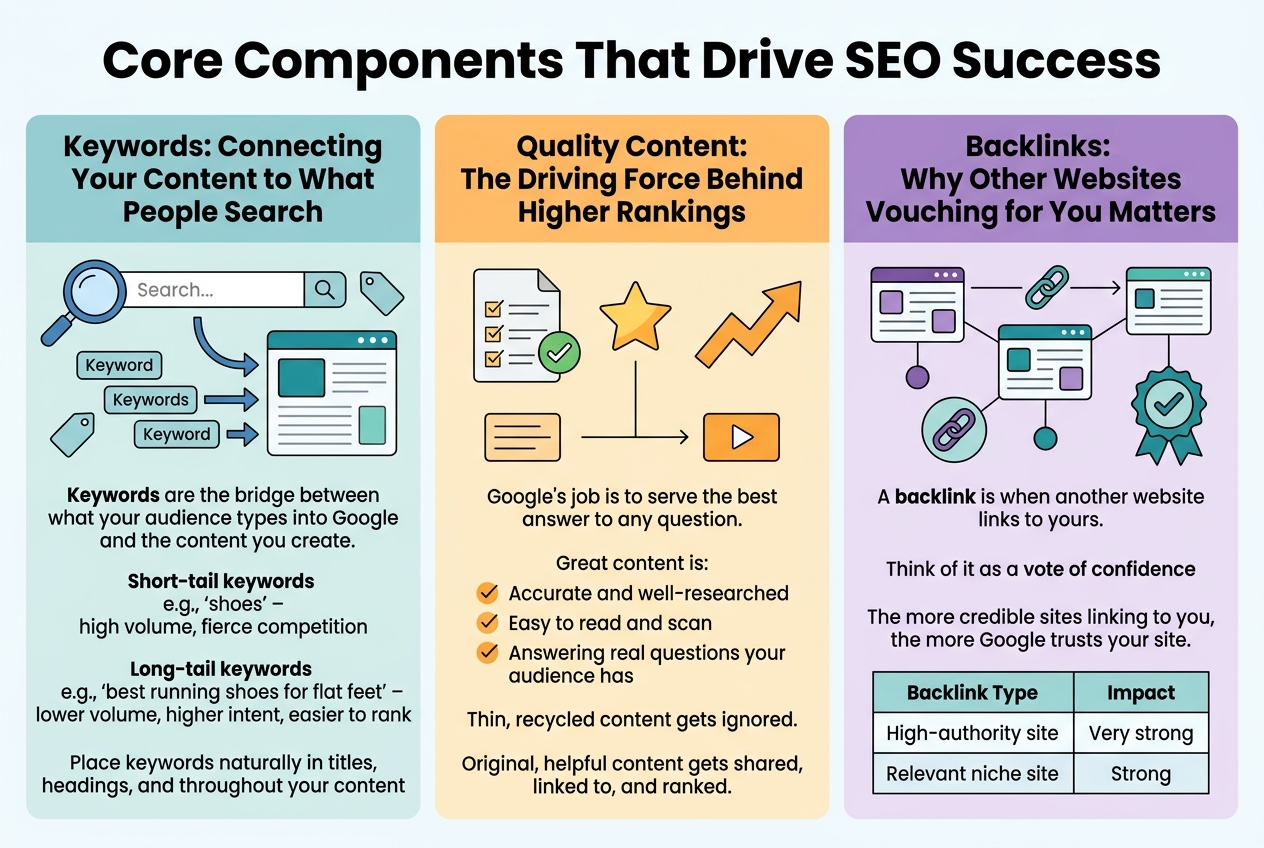
Keywords are the bridge between what your audience types into Google and the content you create. They signal to search engines what your page is actually about.
- Short-tail keywords (e.g., “shoes”) – high volume, fierce competition
- Long-tail keywords (e.g., “best running shoes for flat feet”) – lower volume, higher intent, easier to rank
The goal isn’t stuffing keywords everywhere — it’s placing them naturally in titles, headings, and throughout your content where they actually make sense.
Quality Content: The Driving Force Behind Higher Rankings
Google’s job is to serve the best answer to any question. If your content genuinely helps people, search engines reward you for it.
Great content is:
- Accurate and well-researched
- Easy to read and scan
- Answering real questions your audience has
Thin, recycled content gets ignored. Original, helpful content gets shared, linked to, and ranked.
Backlinks: Why Other Websites Vouching for You Matters
A backlink is when another website links to yours. Think of it as a vote of confidence — the more credible sites linking to you, the more Google trusts your site.
Not all backlinks are equal:
| Backlink Type | Impact |
|---|---|
| High-authority site | Very strong |
| Relevant niche site | Strong |
| Spammy/irrelevant site | Can hurt rankings |
Earning quality backlinks through great content and genuine outreach remains one of the fastest ways to climb search rankings.
The Proven Benefits of Investing in SEO
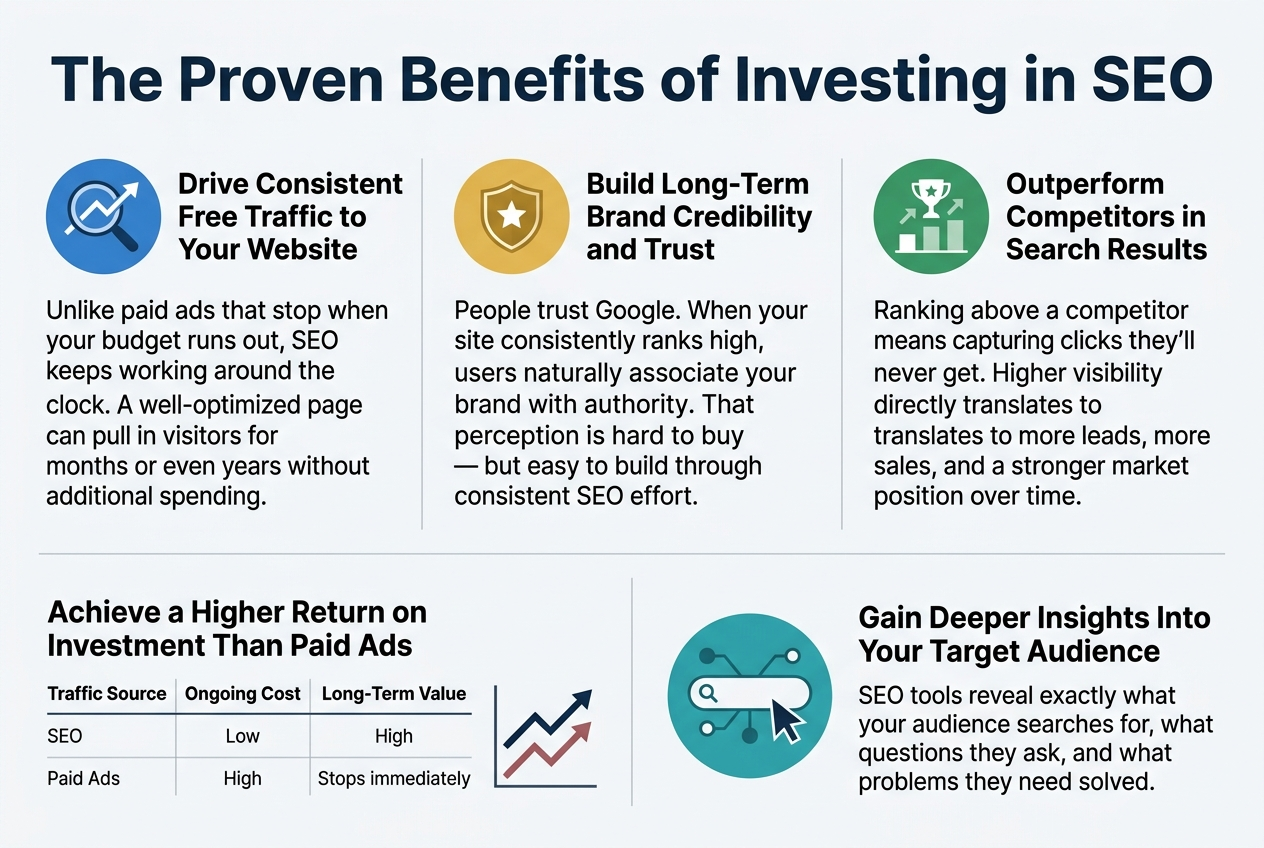
Drive Consistent Free Traffic to Your Website
Unlike paid ads that stop the moment your budget runs out, SEO keeps working around the clock. A well-optimized page can pull in visitors for months or even years without additional spending.
Build Long-Term Brand Credibility and Trust
People trust Google. When your site consistently ranks high, users naturally associate your brand with authority. That perception is hard to buy — but easy to build through consistent SEO effort.
Outperform Competitors in Search Results
Ranking above a competitor means capturing clicks they’ll never get. Higher visibility directly translates to more leads, more sales, and a stronger market position over time.
Achieve a Higher Return on Investment Than Paid Ads
| Traffic Source | Ongoing Cost | Long-Term Value |
|---|---|---|
| SEO | Low | High |
| Paid Ads | High | Stops immediately |
Organic traffic typically delivers better ROI because the cost per acquisition drops significantly as your rankings mature.
Gain Deeper Insights Into Your Target Audience
SEO tools reveal exactly what your audience searches for, what questions they ask, and what problems they need solved. That data shapes smarter content, better products, and sharper marketing across every channel.
How SEO Works in Practice
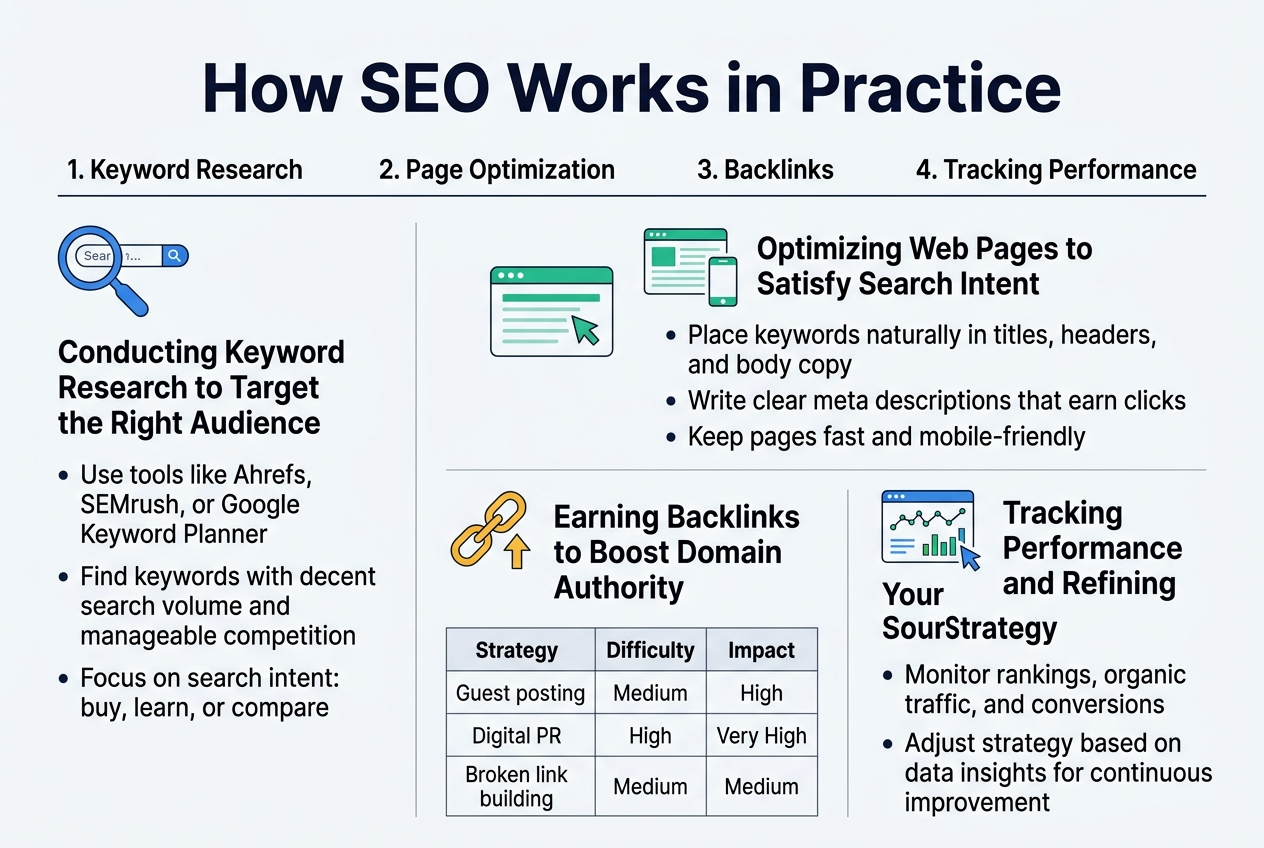
Conducting Keyword Research to Target the Right Audience
Keyword research is where everything starts. You figure out exactly what your audience types into Google, then build your content around those queries.
Key steps:
- Use tools like Ahrefs, SEMrush, or Google Keyword Planner
- Look for keywords with decent search volume but manageable competition
- Focus on search intent — are people looking to buy, learn, or compare?
Optimizing Web Pages to Satisfy Search Intent
Once you have your keywords, every page needs to deliver what the searcher actually wants. Match your content format, depth, and angle to what’s already ranking.
- Place keywords naturally in titles, headers, and body copy
- Write clear meta descriptions that earn clicks
- Keep pages fast and mobile-friendly
Earning Backlinks to Boost Domain Authority
Backlinks act like votes of confidence from other websites. The more quality sites linking to you, the more Google trusts your content.
| Strategy | Difficulty | Impact |
|---|---|---|
| Guest posting | Medium | High |
| Digital PR | High | Very High |
| Broken link building | Medium | Medium |
Tracking Performance and Refining Your Strategy
SEO isn’t a one-time job. Monitor rankings, organic traffic, and conversions through Google Search Console and Analytics, then double down on what’s working.
Common SEO Mistakes That Hold Websites Back
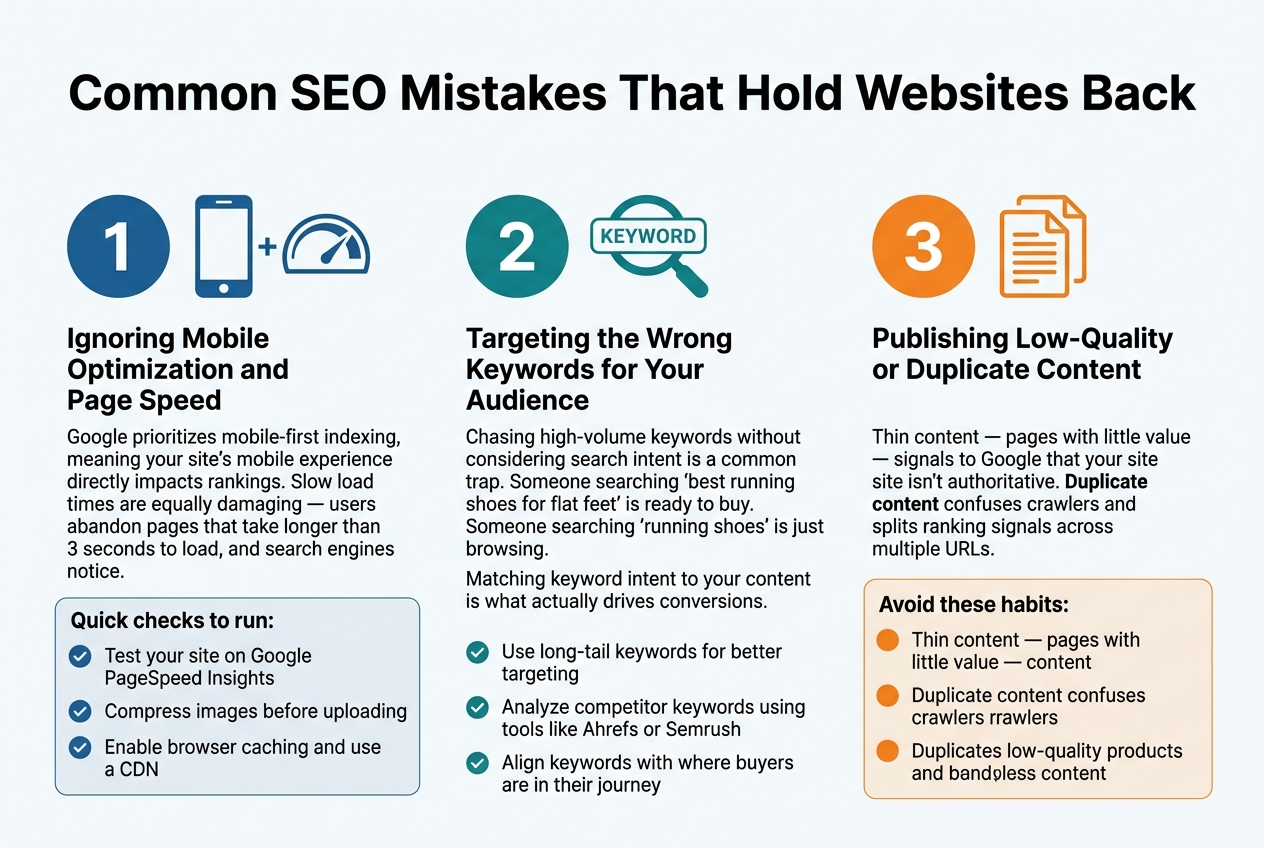
Ignoring Mobile Optimization and Page Speed
Google prioritizes mobile-first indexing, meaning your site’s mobile experience directly impacts rankings. Slow load times are equally damaging — users abandon pages that take longer than 3 seconds to load, and search engines notice.
Quick checks to run:
- Test your site on Google PageSpeed Insights
- Compress images before uploading
- Enable browser caching and use a CDN
Targeting the Wrong Keywords for Your Audience
Chasing high-volume keywords without considering search intent is a common trap. Someone searching “best running shoes for flat feet” is ready to buy. Someone searching “running shoes” is just browsing. Matching keyword intent to your content is what actually drives conversions.
- Use long-tail keywords for better targeting
- Analyze competitor keywords using tools like Ahrefs or Semrush
- Align keywords with where buyers are in their journey
Publishing Low-Quality or Duplicate Content
Thin content — pages with little value — signals to Google that your site isn’t authoritative. Duplicate content confuses crawlers and splits ranking signals across multiple URLs.
Avoid these habits:
- Copying manufacturer descriptions word-for-word
- Publishing near-identical pages targeting similar keywords
- Skipping original research, examples, or genuine expertise in your writing
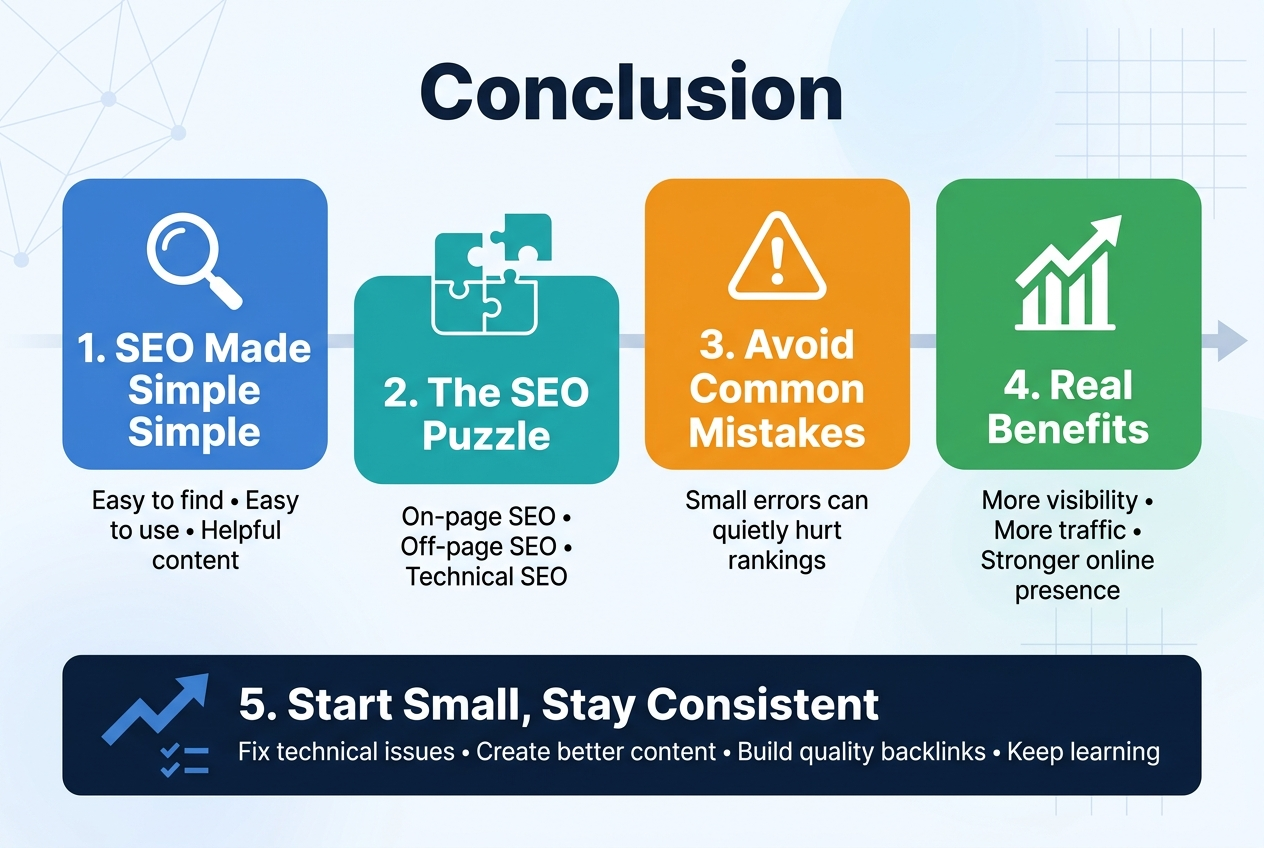
SEO doesn’t have to feel like a mystery. At its core, it’s about making your website easy to find, easy to use, and packed with content that actually helps people. From understanding the difference between on-page, off-page, and technical SEO to avoiding the common mistakes that quietly tank your rankings, every piece of the puzzle matters. The benefits are real — more visibility, more traffic, and a stronger online presence that builds over time.
The best part? You don’t need to get everything perfect right away. Start small, stay consistent, and keep learning as you go. Whether you fix a few technical issues, create better content, or build some quality backlinks, every step moves you in the right direction. SEO is a long game, but the payoff is absolutely worth it.